Sustainable energy: GRAF Group, a commitment that brings results
For over fifteen years, the GRAF Group has been consistently investing in the energy transition, integrating its commitment to sustainability with innovative technological solutions, not only in relation to its products and business areas, but also internally, to improve the ecological footprint of its factories and production processes.
This approach has led to concrete results in terms of energy savings, emissions reduction and improved operational autonomy. Today, we can talk about a virtuous model, consisting of targeted interventions, forward-looking investments and measurable benefits for the company, the local area and the environment.
Our commitment has resulted, first of all, in a radical transformation of our company sites, starting with the Group’s registered office in Nonantola (MO), designed in 2010 as a high-efficiency Class A building. The building, with a surface area of 2,500 m², is equipped with a highly insulated envelope and integrated solar shading. In the summer, energy requirements are almost entirely covered by a 330 kWp photovoltaic system that powers electric heat pumps. This system was upgraded to 364 kWp in 2025, with further provision for up to over 410 kWp.
In 2015, the GRAF Synergy production site in Via Provinciale, also in Nonantola (MO), was also upgraded with structural work on the roof and windows, the installation of new condensing boilers and a 500 kW thermal heat pump. The photovoltaic system, initially 119 kWp, was upgraded in 2024 to 355 kWp and is designed to exceed a total of 500 kWp.
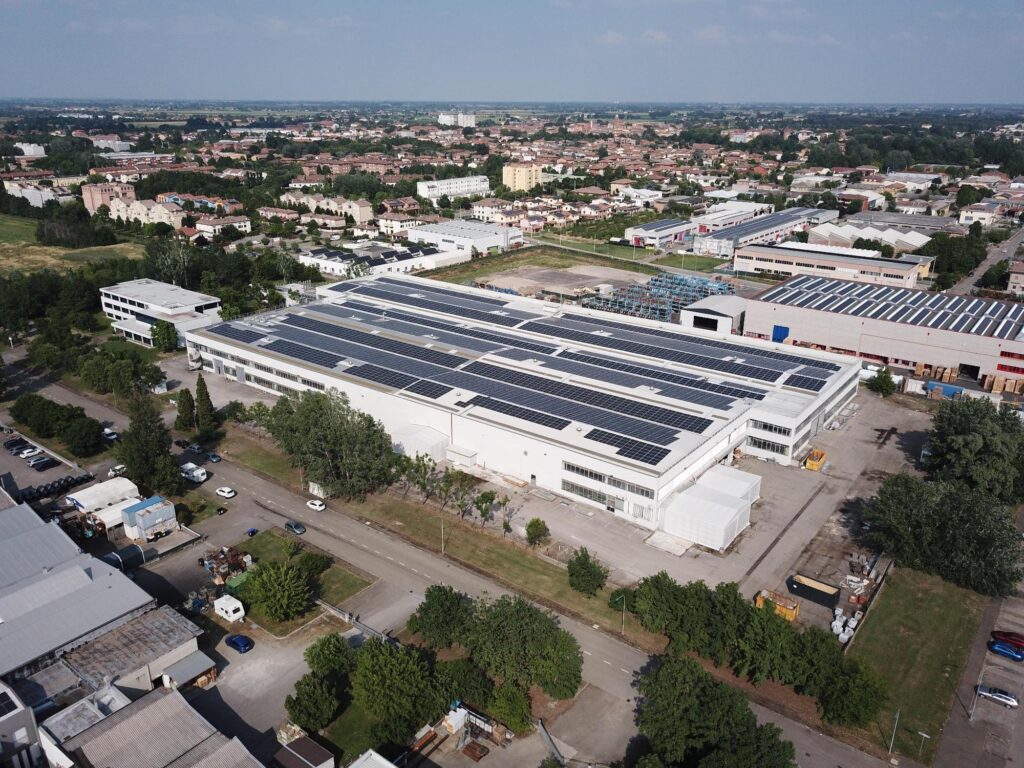
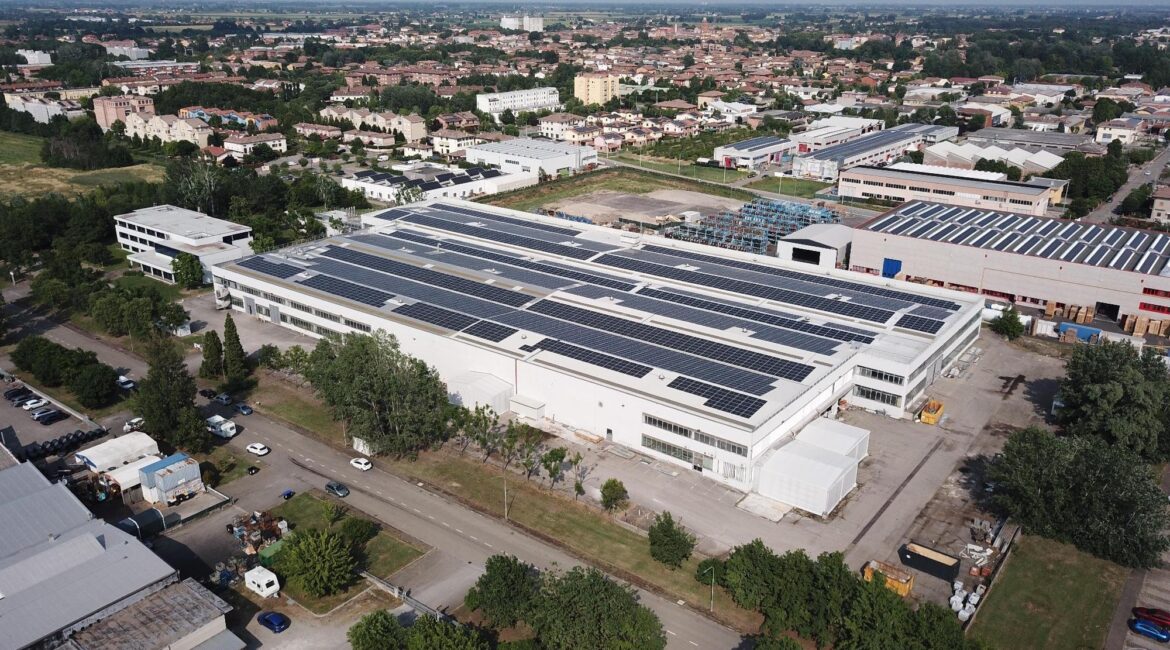
A further step forward was taken in 2022 with the construction of the GRAF production hub in San Giovanni in Persiceto (BO), our largest plant. Here, a 1,937 kWp photovoltaic system, a 1,200 kW thermal air-water heat pump and a 100 m³ thermal storage system, integrated with 770 kW support boilers, were installed. Thanks to this complex and efficient configuration, only in winter 2024-25, gas consumption for heating was reduced by 60%, thus avoiding the release of approximately 155 tonnes of CO₂ into the atmosphere.
To date, the total power installed on our photovoltaic systems is approximately 2.8 MWp. In 2024, we independently produced almost 2.8 GWh of electricity, enough to power over 850 average Italian homes for a year! This brilliant result has prevented the emission of 250 tonnes of CO₂, a significant amount, equal to the amount emitted by a petrol car travelling over 1.8 million kilometres!
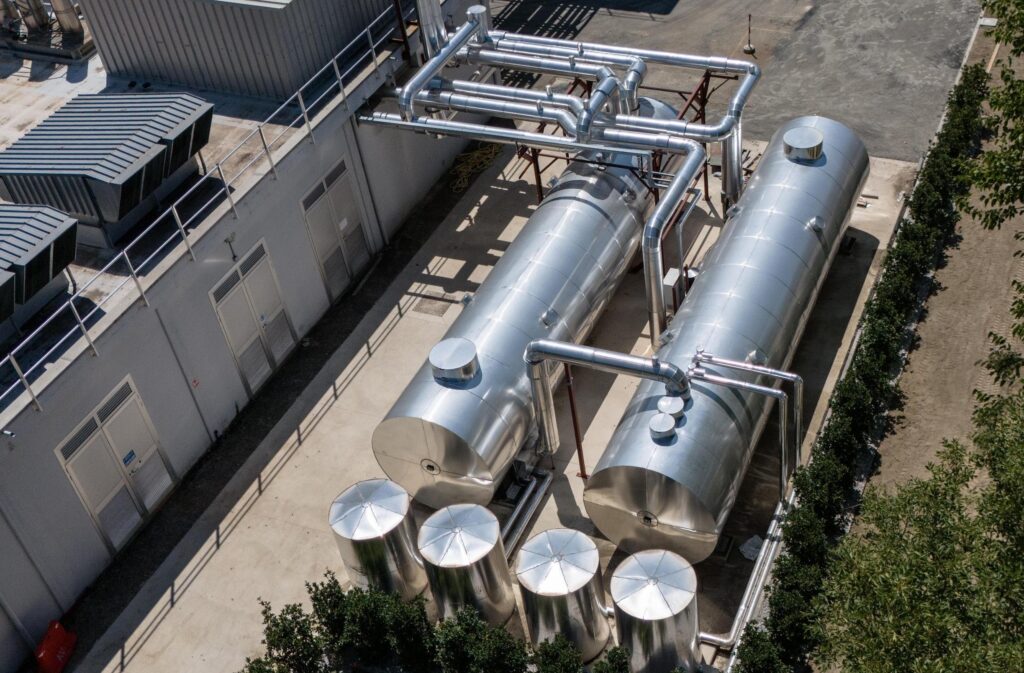
One of the most innovative elements of the GRAF production hub in San Giovanni in Persiceto is the 100 m³ thermal storage system, a veritable “water battery” which synergises the use of three energy sources: thermal energy produced by the heat pump, solar energy from photovoltaics and, only when necessary, gas. This efficient system allows up to 800 kWh to be stored in cooling mode and over 4,000 kWh in heating mode, reducing the power of gas boilers and minimising the use of electricity from the grid.
All this effort has enabled us to avoid drawing almost 1 GWh of electricity from the grid in 2024 alone and to save 60% of the gas used for heating at our San Giovanni in Persiceto site. Thanks to the measures adopted, we have managed to reduce GRAF’s overall emissions by approximately 405 tonnes of CO₂.
Looking ahead to 2026, we estimate that we will exceed 500 tonnes of avoided emissions per year and cover over 50% of our heating needs through renewable sources: our development plan continues with the expansion of our total photovoltaic power, which will exceed 3 MWp by 2026. We are also electrifying our internal mobility with a new fleet of trucks and minivans powered directly by self-produced electricity.
GRAF’s investments demonstrate that environmental sustainability and business competitiveness can go hand in hand. Reducing energy dependence, containing costs and increasing resilience to market fluctuations make us more solid and attractive, not only to customers, but also to our employees and the communities in which we operate.